
What Is Top Shelf Weed? A Guide to Premium Cannabis

What does it take for weed to reach the top of the shelf in a dispensary and for it to justify you paying more for that particular flower? Is it marketing mumbo jumbo or is there something real behind the price difference? The answer is: it’s a bit of both. There is no official qualification system, but there are tells to keep an eye out for to make sure you’re getting what you’re paying for.
Where the Term Comes From
Top shelf is a literal reference to how premium products have traditionally been displayed. High-quality cannabis, much like premium spirits in a bar, gets placed on the highest shelf, where it's most visible and hardest to reach. The tier below it is mid-shelf, and the most affordable options sit on the bottom.
Most dispensaries, including ours, organize their flower selection this way, though the terminology can vary, so you might also see terms like craft cannabis, small-batch, or reserve used to describe the same premium tier.
What Makes Cannabis Top Shelf Cannabis
There's no official grading system for cannabis flower, and no regulatory body stamps a bud "top shelf" the way the USDA grades beef. That's led plenty of people to write the term off as pure marketing, and a shelf-talker phrase dispensaries slap on whatever they want to charge more for.
But that's not quite right either. While there's no formal certification, top shelf cannabis tends to share a specific set of physical and cultivation-based characteristics that separate it from the mid-tier and budget flower sitting next to it:
- Trichome Density
- Aroma and Terpene Profile
- Bud Structure and Trim
- Growing Environment and Practices
- Proper Curing
Trichome Density
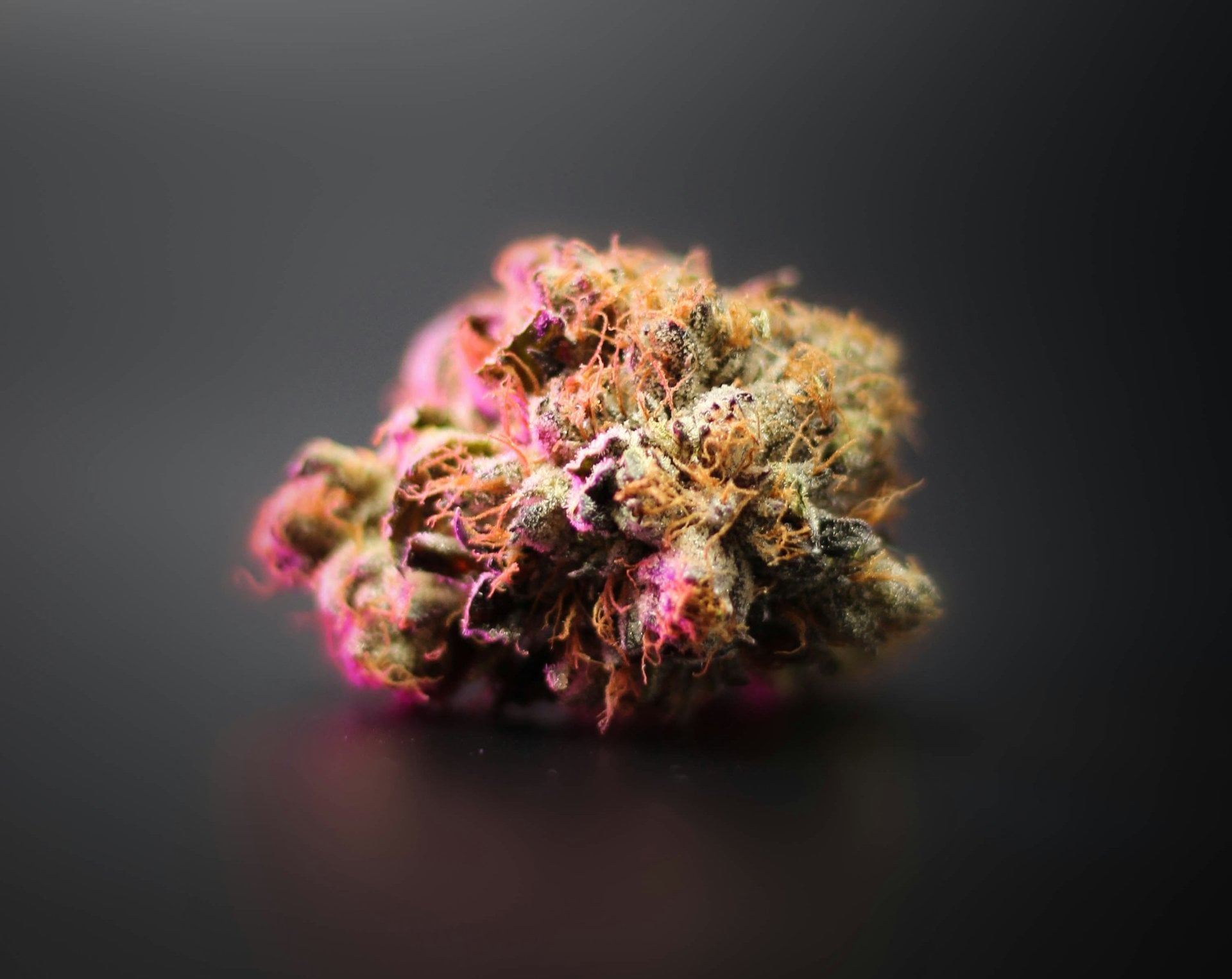
Trichomes are the tiny, crystal-like structures that coat the surface of high-quality cannabis flower. They're where most of the plant's cannabinoids and terpenes are produced and stored, which means denser trichome coverage generally means higher potency and a stronger aroma.
Top shelf flower is visibly coated in trichomes, and under good light, it looks almost frosted. Lower-quality flower tends to have sparser trichome coverage, either because of inferior genetics, suboptimal growing conditions, or improper handling and curing after harvest.
Aroma and Terpene Profile
Smell is often the first tell, and one of the most immediate and reliable indicators of quality in general. Top shelf cannabis has a strong, complex, and distinct aroma, be it fruity, earthy, diesel, floral, or something in between.
That aroma comes from terpenes, and a complex terpene profile does more than just make cannabis smell good. It also contributes to the overall effect through what many people refer to as the entourage effect, which is the idea that terpenes and cannabinoids work better together than any one compound does alone.
Cannabis that smells like very little, or smells like hay, has likely lost most of its terpene content, usually through improper drying, curing, or storage.
Bud Structure and Trim
Top shelf flower looks the part. Well-grown buds are dense, properly structured, and trimmed cleanly, meaning excess leaf material has been removed without damaging the flower itself. The color should be vibrant. Think deep greens, hues of purple, orange, or blue, depending on the strain. Brown or faded flower is a sign of age, heat exposure, or poor cultivation conditions.
The trim job matters more than it might seem. Over-trimmed flower loses trichomes along with the leaf; under-trimmed flower looks sloppy and smokes harsher. A clean, precise trim is a hallmark of a grower who takes the finishing process seriously.
Growing Environment and Practices
Top shelf is as much about growing environment as it is genetics. A rare or exotic cultivar grown in suboptimal conditions will produce a different product than the same genetics grown in a carefully controlled environment.
Indoor grows allow for precise control over temperature, humidity, light cycles, and airflow, all of which influence the final quality of the flower. That level of control is expensive to maintain, which is part of why indoor top shelf typically costs more than outdoor or greenhouse-grown cannabis.
Cultivation practices matter, too. Organic growing methods, living soil, and careful harvest timing all contribute to a cleaner, more flavorful final product. Many of the brands that consistently produce top shelf flower are transparent about how they grow, and that transparency tends to be a quality signal in and of itself.
Proper Curing
Curing is the process of slowly drying harvested flower under controlled conditions over several weeks. It's one of the most important steps in cannabis production and one of the most commonly rushed.
Terpenes are fragile. They break down from heat, light, and oxygen exposure. Rushing the curing process or storing flower improperly after the fact can undo everything that happened in the grow room.
Properly cured cannabis burns more evenly, tastes cleaner, and preserves its terpene profile far better than flower that's been dried too quickly. Top shelf weed is always properly cured. It should feel slightly spongy when squeezed, not bone dry and crumbling, and not wet or sticky.
Top Shelf vs. Mid Shelf vs. Budget: The Showdown
The difference you’ll notice first is the one in pricing. But here’s the real difference between the three tiers across factors that tend to matter to consumers the most.
| Top Shelf | Mid Shelf | Budget | |
|---|---|---|---|
| Trichome density | High, visibly frosted | Moderate, still visible to the eye | Lower, with little visible frost |
| Aroma | Strong, complex, and strain-specific | Clear but simpler, often one dominant note | Mild or faded |
| Bud structure | Dense, hand-trimmed, and vibrant | Reasonably dense, usually machine-trimmed | Often loose, airy, or poorly trimmed |
| Growing environment | Usually indoor, carefully controlled | Indoor or greenhouse | Outdoor or lower-input indoor |
| Curing | Slow-dried and cured for several weeks | Properly dried, but cured for less time | Often rushed, which costs aroma and smoothness |
| Typical potency | Often high, but not guaranteed | Frequently overlaps with top shelf | Can test well despite the appearance |
| Shelf life once opened | Holds aroma and texture longest | Good for several weeks in proper storage | Dries out fastest |
| Price | Highest | Mid-range | Most affordable |
| Best for | Flavor chasers, special occasions, and gifting | Everyday use without giving up much quality | Edibles, infusions, and high-volume use |
Does Top Shelf Flower Mean Higher THC?
Not always, and many people don't realize that. THC percentage has become the default shorthand for quality in a lot of dispensary conversations, but it's not the whole picture. A flower testing at 30% THC with a flat terpene profile and poor cure can deliver a less satisfying experience than something testing at 22% with dense trichomes and a complex, well-preserved aroma.
Top shelf cannabis is about the full sensory and physiological experience, including potency, flavor, aroma, burn quality, and effect.
How to Spot Top Shelf Weed at a Dispensary
You already know what it takes for weed to be deemed top shelf. Here’s what to look out for to make sure you’re getting the real deal.
- Look for visible trichome coverage: Under good lighting, top shelf flower looks frosted or crystalline. If the surface looks dull or bare, that's a tell.
- Smell it, if allowed: A strong, specific, complex aroma is one of the best quality indicators there is. If it barely smells like anything, terpenes have likely degraded.
- Check the trim and structure: Well-formed, cleanly trimmed buds with vibrant color are a sign of top shelf cultivation processes.
- Read the COA on the label: A Certificate of Analysis from a third-party lab tells you the full cannabinoid and terpene breakdown. Brands that sell the real deal tend to make these easy to find.
- Ask your budtender: This is what they're there for. A good budtender can tell you which products on the shelf are worth the premium and which ones are coasting on the label.
Get Quality Weed at Quality Roots
Top shelf weed doesn't have to be a special occasion purchase, but it should always be exactly what it says it is. At Quality Roots locations, we carry a curated selection of premium flower from growers who take the growing, curing, and finishing process seriously. Our budtenders can walk you through what's currently on the top shelf, what makes each one stand out, and help you find something worth the step up.