
What Americans Should Know Before Visiting Amsterdam Coffeeshops
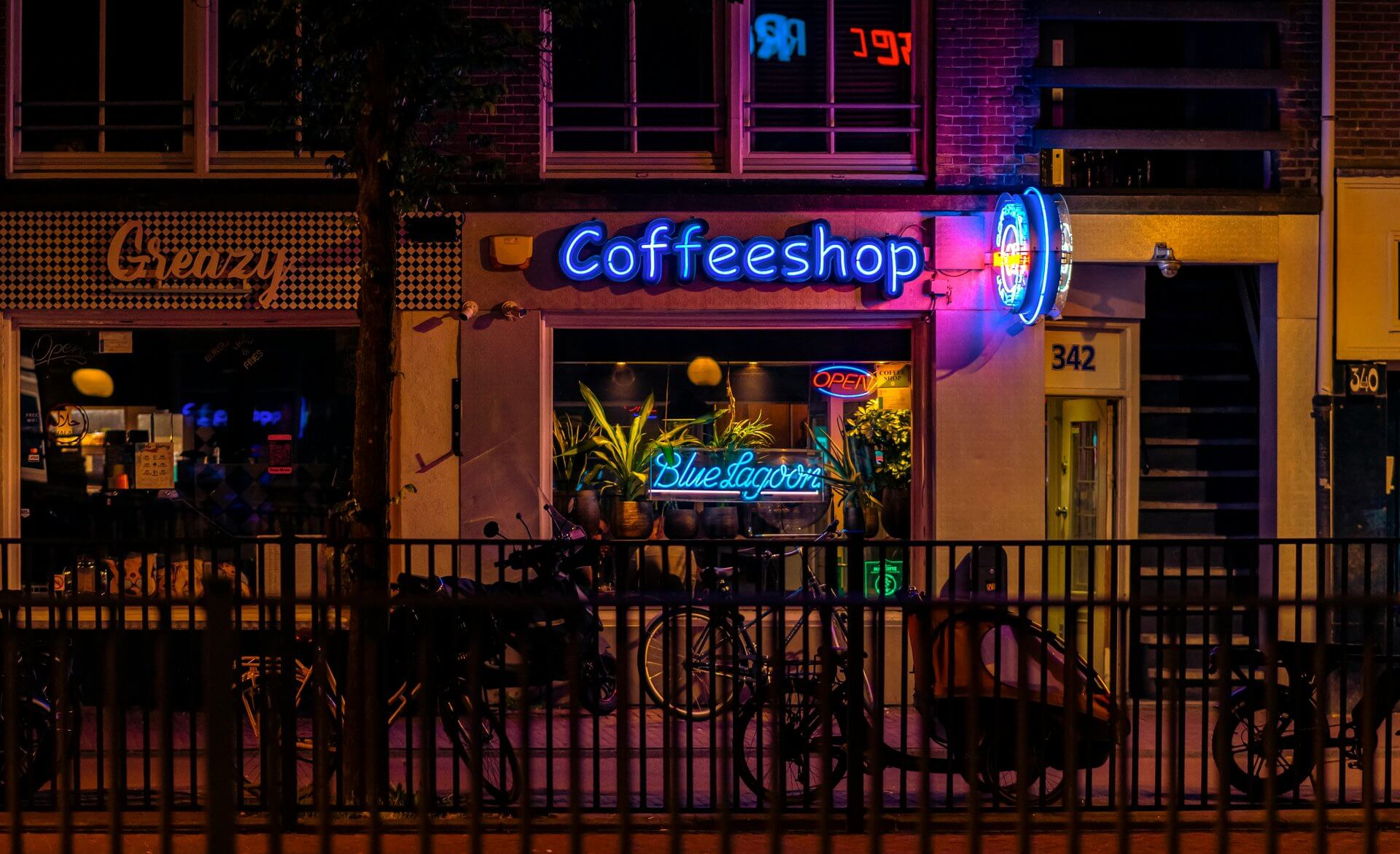
If you're used to shopping at a licensed U.S. dispensary, Amsterdam's coffee shop scene will feel familiar and foreign at the same time. The menus look similar enough, and the vocabulary overlaps. But the legal framework under it, and a lot of the day-to-day etiquette, works nothing like what you're used to at home. Because marijuana isn’t actually legal in the Netherlands.
Wait…Weed Isn’t Legal in Amsterdam?
Not exactly, and that surprises a lot of first-time visitors. Cannabis has never been formally legalized in the Netherlands. Not in Amsterdam, and not anywhere in the country. What Amsterdam operates under is called gedoogbeleid.
Gedoogbeleid is a tolerance policy dating back to the 70s, under which small-scale possession and licensed coffeeshop sales aren't prosecuted, even though they remain technically illegal under Dutch law.
It's a deliberate, pragmatic workaround, not legalization in the American sense. That workaround gave Amsterdam enough distance from criminal enforcement to build an entire tourism industry around it, without ever changing the underlying law.
The Rules Amsterdam Coffeeshops Operate Under
The framework coffeeshops operate under is sometimes summarized by an acronym, AHOJ-G, which translates to no hard drugs, no advertising, no nuisance, no sales to minors, and no exceeding purchase limits. In practice, that means a few concrete rules every visitor should know:
- You must be 18 or older to enter a coffeeshop at all, let alone buy anything: Staff take ID checks seriously, since shops risk losing their license over it.
- Bring a passport or national ID card: A driver's license, especially a non-EU one, sometimes won't be accepted as valid proof of age.
- You can buy up to 5 grams per day: You're also not allowed to carry more than that on your person at any time.
- Amsterdam does not require residency, but some Dutch cities do: Places like Maastricht and Eindhoven largely restrict sales to Dutch residents only, but Amsterdam has consistently kept its coffee shops open to tourists.
- Public smoking has limits: Certain high-traffic areas, including De Wallen, Dam Square, Damrak, and Nieuwmarkt, currently prohibit public cannabis smoking, backed by an on-the-spot fine for violations. Smoking inside a licensed coffeeshop remains the standard, expected way to consume what you buy.
Amsterdam's city government has revisited the idea of banning tourists from coffeeshops more than once in the past several years, largely to cut down on so-called "cannabis tourism" congestion in the city center. As of 2026, tourists remain welcome, but it's a policy debate that resurfaces periodically, so it's worth a quick check before you travel if you're planning a trip specifically around it.
The Difference Between a Coffeeshop and a Coffee Shop
There’s one thing that confuses Americans even more than anything related to laws, regulations, or etiquette. In the Netherlands, "coffee shop" and "coffeeshop" are not the same thing.
A regular coffee shop (two words) is exactly what it sounds like—a cafe that sells coffee, pastries, maybe a sandwich. Not cannabis.
A coffeeshop (one word) is the licensed cannabis retailer. These are the establishments operating under the gedoogbeleid tolerance policy, selling cannabis and hash, and generally not serving alcohol at all. Confusingly, some coffeeshops still keep espresso machines around for appearance's sake, but that's not really the point of the place.
Knowing the difference will prevent you from wandering into a regular coffee shop expecting a menu of strains and getting a confused look and a cappuccino. Look for a green-and-white "Coffeeshop" sign, often featuring a leaf or a Rastafarian-inspired logo, and you'll know you've found the real thing.
What’s on the Menu in an Amsterdam Coffeeshop
Coffeeshop menus aren’t that much different from those in the U.S., with a few differences in how things are packaged and sold:
- Pre-rolled joints are far more central to the coffeeshop experience than in most U.S. dispensaries. Many shops roll to order at the counter, often blended with tobacco, a practice that's much less common stateside.
- Hash occupies a much bigger share of the menu than it typically does in American dispensaries, with a long tradition and wide variety, from Moroccan to Dutch-pressed styles.
- Space cakes and other edibles are available, though dosing information and consistency tend to be far less standardized than what you'd find on a U.S. dispensary label.
- Flower is sold by weight, generally in smaller increments than typical U.S. dispensary minimums.
The Matter of Standardized Lab Testing in the Netherlands
U.S. dispensary products, including everything on our shelves at Quality Roots, go through mandatory, state-regulated lab testing for potency and contaminants, with results printed directly on the label.
Most Dutch coffeeshops still don't operate under anything close to that same regulatory testing structure. THC percentages are sometimes posted, but historically they haven't been universally standardized or independently verified the way they are in a legal U.S. cannabis market.
That said, this is starting to shift. Since April 2025, coffeeshops participating in the government's Wietexperiment (Controlled Cannabis Supply Chain Experiment) across ten municipalities have been allowed to sell cannabis exclusively sourced from licensed, regulated growers, with quality oversight from the Dutch Food and Consumer Product Safety Authority (NVWA). As of November 2025, Amsterdam's Oost district became the first part of the city to join the pilot.
That's not a knock on the culture. Amsterdam pioneered public, above-ground cannabis retail decades before most of the U.S. caught up, but its regulatory model is still in the middle of catching up to the testing standards American consumers are used to.
Before You Book That Flight to Amsterdam
If Amsterdam's a little too far for a Tuesday afternoon, you don't have to cross an ocean to get a transparent, well-curated cannabis experience. All you need is a trip to your nearest Quality Roots location. Lab-tested potency, clear labeling, and a team that can walk you through exactly what you're buying, with no passport required (we will ask for a form of ID, though).