
What are Cannabinoids?
The cannabis plant produces a variety of compounds known as ‘Cannabinoids’ that fall into one of two categories: endocannabinoids and phytocannabinoids. Phytocannabinoids are the naturally-occurring chemical compounds found in cannabis, while endocannabinoids are cannabinoids that exist naturally within the body.

Anandamide was the first endocannabinoid to be discovered. Anandamide binds to the same receptor that THC acts on. THC and CBD are the two best-known phytocannabinoids; more than 100 other cannabinoids are less well known but equally important. These lesser-known cannabinoids can also influence the therapeutic effects you feel and the type of high you experience while consuming cannabis.
Explore cannabis products with specific cannabinoid profiles at Quality Roots.
Shop NowActivation of Cannabinoids
Cannabinoids are not fully active in the human body until they are decarboxylated, or “decarbed”. The acid form of these cannabinoids (THCA, CBDA, etc) is what exists before the plant is heated. Prior to activating the cannabinoid acids, these cannabinoids provide no intoxicating effects. Decarboxylation is the process of heating cannabis to activate the cannabinoids, allowing them to bind to your receptors and cause therapeutic and/or intoxicating effects.
Product Labels
With traditional pharmaceuticals, the active ingredients listed on the label are the compounds responsible for creating the desired effect, whether that be pain relief, allergy relief, sleep aid, etc. The active ingredients in cannabis products are the cannabinoids and terpenes. These cannabinoids can be found listed on cannabis product labels just like active ingredients on labels you may be more familiar with.
How Do Cannabinoids Work In The Body?
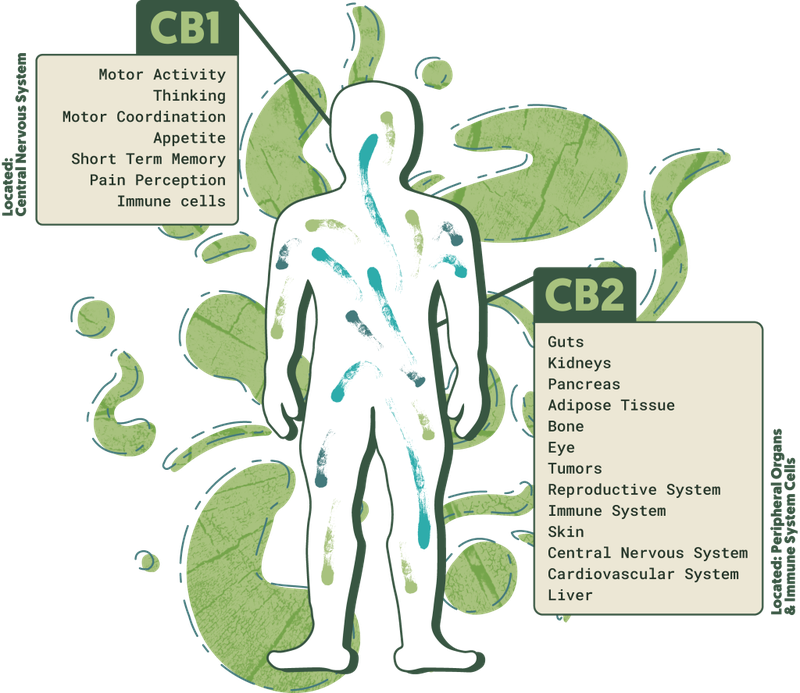
Cannabinoids interact with the Endocannabinoid System (ECS). Every human, regardless of whether they have ever consumed cannabis, has an endocannabinoid system that helps maintain homeostasis across several processes, including sleep, mood, internal organ function, and digestion.
There are 2 main cannabinoid receptors that make up the endocannabinoid system: the CB1 & CB2 receptors. CB1 receptors are found mostly in the brain and central nervous system, while CB2 receptors are found mostly in the peripheral nervous system.
Cannabinoids, like THC, that bind to CB1 receptors are what cause intoxication effects, or that “high” feeling. Other cannabinoids that bind mostly to CB2 receptors have therapeutic benefits but no intoxicating effects.
Most Common Cannabinoids Found in Cannabis
THC (Tetrahydrocannabinol)
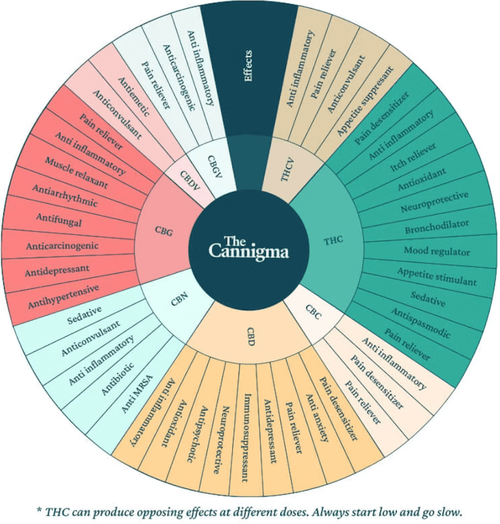
THC (Tetrahydrocannabinol) is the most well-known cannabinoid found in the cannabis plant and is responsible for providing the “high” effect cannabis is most known for. THC can attach to both your CB1 and CB2 receptors; however, THC primarily binds to the CB1 receptors, which are responsible for the psychoactive effects felt while consuming cannabis.
Some common effects of THC, when dosed properly, can include euphoria (high feeling), anti-anxiety, anti-depressant, appetite stimulation, anti-inflammatory, anti-convulsant, and many more.
CBD (Cannabidiol)
CBD (Cannabidiol) is the second most well-known cannabinoid following THC. CBD is a non-intoxicating cannabinoid that can bind to receptor systems in your body that regulate pain perception, inflammation, and body temperature.
The activity of CBD on the Endocannabinoid system is not fully understood yet; however, we do know that CBD can actually lessen the adverse effects of THC, like memory impairment and anxiety. CBD can also help alleviate symptoms of depression, reduce pain and inflammation, and act as an anticonvulsant.
CBN (Cannabinol)
CBN (Cannabinol) is a mildly psychoactive cannabinoid and is the breakdown product of THC. Over time, with exposure to oxygen, THC will slowly start to break down (oxidize) into CBN. If not stored properly, older cannabis flower will likely have higher contents of CBN. CBN can be used as a sleep aid or sedative.
CBN also has anticonvulsant effects and may be beneficial to people suffering from seizure disorders. This cannabinoid has also been shown to reduce pain and inflammation associated with conditions such as arthritis and Crohn's Disease.
CBG (Cannabigerol)
CBG (Cannabigerol) is the “mother” of cannabinoids, meaning that CBG is the precursor to all other cannabinoids. This cannabinoid is non-psychoactive and reduces the potency of THC and other cannabinoids by blocking them from attaching to your endocannabinoid receptors.
CBG works to fight inflammation, pain, and nausea, and works to slow the proliferation (growth/spread) of cancer cells. Research has shown that it also significantly reduces intraocular pressure in glaucoma. Strains high in CBG will be beneficial in treating conditions such as inflammatory bowel disease, Crohn’s disease, and cancer.
CBC (Cannabichromene)
CBC (Cannabichromene) is another non-psychoactive cannabinoid that appears to interact with other cannabinoids, enhancing their effects through the entourage effect. We are still in the early stages of research on this minor cannabinoid, but CBC appears to reduce pain and inflammation and to have neuroprotective and mood-elevating properties. CBC can be used to help relieve symptoms of Crohn’s disease, neuropathy, and chronic postoperative pain.
THCV (Tetrahydrocannabivarin)
THCV (Tetrahydrocannabivarin) is a psychoactive cannabinoid known to produce feelings of alertness, motivation, and euphoria. You may have heard people call THCV “diet weed” because this cannabinoid suppresses appetite and upregulates energy metabolism. THCV has also been shown to have neuroprotective properties, helping treat conditions like Alzheimer's, Parkinson’s, and multiple sclerosis.
The Entourage Effect
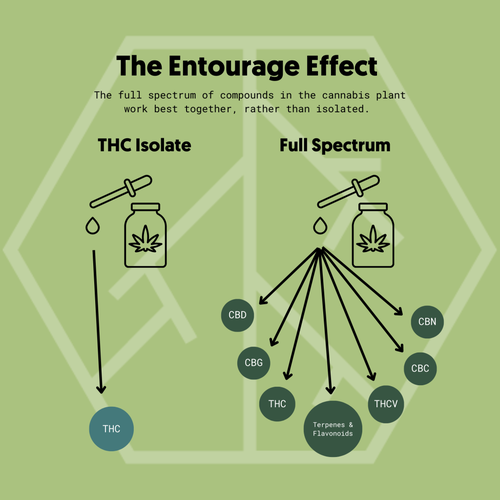
While cannabinoids do produce effects on their own, their effects may be modulated in the presence of other cannabinoids, terpenes, and flavonoids. As discussed earlier, CBD and CBG can change how THC binds to our endocannabinoid receptors, lessening some of the effects THC alone may cause.
This is known as the entourage effect; the idea that compounds in cannabis work together to produce effects that they normally wouldn't when isolated. So, while it is important to understand what cannabinoids are and how they affect us when isolated, it is important to keep in mind that these effects may change in the presence of other cannabis compounds.
The entourage effect may be difficult to study, but ongoing research is increasing our understanding of this synergy.
Knowledge is Power
Many cannabis brands are using this knowledge of cannabinoids and their functions to make specific cannabis formulations for a more ‘dialed-in’ experience. For example, cannabis products can be enhanced with isolated CBN to increase the sedative effects of cannabis to help people sleep better.
Another example may be adding isolated CBC or CBD to cannabis products to increase the pain-relieving effects of the product. Understanding the different cannabinoids and their effects will enable consumers to select products that are most enjoyable or beneficial for their needs.
We carry many brands at Quality Roots that we think do a very good job of using this knowledge to create cannabinoid-specific products.
Wyld
Wyld is a cannabis edible brand that is taking over the nation with its unique cannabinoid formulations. Wyld’s Blood Orange Sativa 1:1 CBC gummies are great for a day out and about or boosting creativity. These gummies may also be beneficial for reducing pain caused by inflammation more than traditional cannabis gummies. Wyld Strawberry Hybrid 20:1 CBD gummies are perfect for relaxing your body while keeping your mind sharp and alert.
Wana
Wana is another cannabis gummy brand that turns cannabinoid science into carefully targeted formulas for specific effects. Wana offers both classic and fast-acting gummies with precise ratios that combine THC with minor cannabinoids like CBN, CBD, and CBC to support goals such as deeper sleep, calmer evenings, or a more uplifted daytime mood.
These cannabinoid-focused recipes make it easier for consumers to shop by outcome, allowing them to choose gummies designed for faster onset, longer-lasting relief, or more functional relaxation that fits into a busy day.
CANNALICIOUS LABS
Cannalicious Labs offers a full line of natural and potent cannabis products that are grown in nature and rooted in science. They produce their Michigan-grown products in a state-of-the-art facility using only the best manufacturing processes. Each unique extraction method produces a different result and helps to create a versatile product line, which is then tested for quality to ensure it meets only the highest standard.
You can find all of these products and more at the nearest Quality Roots location in your area. When you stop in, be sure to express your needs to our Quality Care Specialists and they will help you locate the best product for you!
Find Cannabinoid-Specific Products at Quality Roots
Ready to explore cannabinoid-focused products like Wyld, Wana, and Cannalicious Labs?
Quality Roots carries a wide selection of edibles, flower, and concentrates with specific cannabinoid profiles at locations across Michigan and New Jersey. Our knowledgeable Quality Care Specialists can help you find the perfect product for your needs. Find us in Monroe, Detroit, Battle Creek, Owosso, Hamtramck, Berkley, Kalamazoo, Madison Heights, Waterford, Evesham, and Marlton.
Ready to shop cannabinoid-specific products? Explore our full selection online.
Shop Now