
What Factors Affect Your Cannabis Tolerance and THC High?

Has this ever happened to you? You and your friend decide to partake in your favorite strain of cannabis, you share a couple of hits each from your vape pen, or maybe you both eat a single serving of an edible. However, despite consuming the same amount of cannabis, you both have very different experiences.

The question is, how is it possible for the two of you to experience very different things? After all, you both got the same amount of THC from the same product. Yet, your friend becomes incredibly relaxed while you don’t feel anything at all. Or, maybe your friend feels very little, but you become overly unsettled and paranoid.
Here’s the thing: cannabis affects everyone differently. Several different factors can affect how you feel when you use cannabis, leading to unique experiences for you and anyone else who partakes with you. Understanding what affects your high can also help you to have much more enjoyable experiences. It can also help you determine what provides the best results for you.
The Product You Use
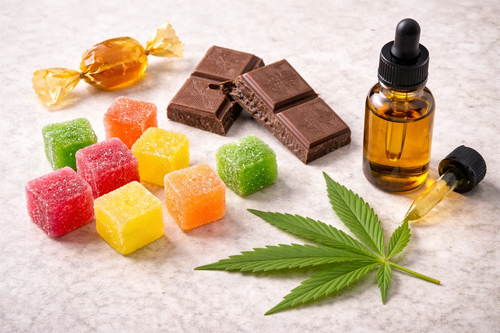
When it comes to using cannabis, you have a multitude of options. Between smoking, vaping, eating edibles, and using a tincture, every method has different variables that will affect your high. Eating an edible, for instance, will hit differently than taking a hit from a vape pen. Inhalation methods (vaping and smoking) provide rapid results, as does a sublingual tincture. With an edible, you won’t feel anything right away. The effects you do feel, however, tend to be more potent.
The Cannabinoid Profile
Cannabinoids are the compounds in the cannabis plant responsible for the effects you feel. No matter what your experience level with marijuana, there’s a good chance that you’ve at least heard of THC and CBD. These are the two most abundant cannabinoids, and they offer a range of health benefits, including relief from pain, inflammation, anxiety, depression, PTSD, and more.
THC is the cannabinoid responsible for getting you high. However, CBD can interfere with THC’s high-inducing properties, dampening the psychoactive effects. As such, a high THC product with little to no CBD is likely to have more potent effects than a product that contains equal parts THC and CBD or more CBD than THC.
The Terpene Profile
Every cannabis plant also contains terpenes. These compounds are mainly responsible for the aroma and flavor of a particular strain. While current research is limited, it also suggests that terpenes may play a role in your high. Evidence suggests they can intensify or lessen a high, but more research is needed.
At the very least, these compounds offer a wide range of delightful scents and flavors that can enhance your overall experience.
The Dose You Take
The amount of a particular product that you take can have a significant impact on your high. For instance, a too-small dose could mean you feel little to nothing at all. On the other hand, taking too much could result in some rather unpleasant side effects, such as extreme paranoia and anxiety.
While these effects are temporary, they’re not enjoyable when you’re in the thick of them. For some, it can feel as though they’ll never go away. The general recommendation is to start low and gradually increase your intake until you find your sweet spot.
Your Age

Perhaps you’ve come across this scenario - someone tells you that they used to indulge in cannabis “back in the day,” but they can’t do it anymore. Even the smallest doses have harsh consequences. It appears as though most people lose their tolerance for cannabis as they get older. While this isn’t the case for everyone (after all, Willie Nelson still indulges in cannabis products, and he recently turned 88), it’s certainly something to keep in mind.
Your Tolerance
Age is only one factor that affects your tolerance. Everyone’s body is different, and as such, everyone’s tolerance is different. Your physiology (your sex, weight, etc.), frequency of consumption, and how long you’ve been taking cannabis can all play a role. For instance, if you’re on the smaller side and new to cannabis, your tolerance might not be as high as someone who’s been smoking or eating edibles for a few years. To avoid uncomfortable effects, you might want to start with a small dose to see how a particular product affects you. You can then gradually increase the dosage until you reach the type of high you’re hoping to experience.
Does Your Weight Affect How High You Get?
Your weight can play a role in your cannabis experience, though it is not as straightforward as "more body weight means a weaker high."
The key factor is body fat, not body weight alone. THC is fat-soluble, meaning it gets stored in fat cells. People with higher body fat percentages may find that THC absorbs into tissue more readily, which can reduce the intensity of an immediate high. It can also mean THC stays in your system longer between sessions.
On the flip side, someone with very little body fat may feel effects more quickly and intensely from the same dose. Metabolism plays into this, too. A faster metabolism processes THC more quickly, which can shorten the duration of your high regardless of body composition.
The bottom line: body weight is one piece of a larger puzzle that includes your tolerance, the product you are using, and how frequently you consume. If you are new to cannabis or returning after a break, starting with a low dose and working up is the smartest approach, no matter your size.
Your Mood
Believe it or not, your mood could have an impact on your high. If you’re worried about getting caught, for instance, smoking or eating an edible could amplify those feelings. As a result, you might suddenly become overly anxious or paranoid. On the other hand, taking a few hits from a joint when you’re feeling more comfortable could help to enhance your relaxation and make you feel more at ease.
Your Environment
Just as your mood can affect your high, so, too, can your environment. If you’re in an unfamiliar place or surrounded by people you don’t know, you might have an alright time, but it won’t be as good as it can be. However, if you’re in a place where you feel completely safe and comfortable, you’re much more likely to enjoy your experience and have a great time. If you’re with people you trust, you may also become more social.
How Long Does Cannabis Stay in Your System?
If you're wondering how long cannabis stays in your system, the answer depends on multiple factors. The THC you consume gets processed by your body and broken down into metabolites. These metabolites are what a drug test actually detects.
For occasional cannabis users, THC metabolites may be detectable in urine for a few days. However, chronic users or those with heavy cannabis use may test positive for up to 30 days. Hair follicle tests can detect metabolites for up to 90 days, making them the longest detection window.
Your metabolism plays a significant role in how quickly you process THC. People with a fast metabolism clear THC faster than those with a slower metabolism. Metabolic rates vary from person to person, which is why two people with similar cannabis use patterns can have different detection times.
Body fat also affects how long THC stays detectable. Since THC is fat-soluble, it gets stored in fat cells throughout your body. Individuals with higher body fat may retain stored THC longer and metabolize these compounds more slowly. This can affect how long you test positive on a drug test.
Some people try to flush THC from their system faster by mixing cannabis with exercise. The theory is that burning fat releases stored THC from fat cells. While this may help speed up the process, the frequency and duration of your cannabis use ultimately determine how long metabolites remain detectable in your system.
For the Best Cannabis Experiences, Know What Affects Your High
From the product itself to your physiology to your mental state when you decide to use cannabis, numerous factors play a role in your high. When you know how different types of cannabis affect you, you can more effectively choose products that provide you with the best results possible. You’re also more likely to have a more enjoyable experience.
If you’re looking for high-quality recreational marijuana in Michigan, Quality Roots has what you need. As one of the best Michigan & New Jersey dispensaries, Quality Roots offers a broad selection of top cannabis products on the market.
Visit Quality Roots online to browse available items!
Place your Order TodayFrequently Asked Questions About Cannabis Tolerance
How do you lower your tolerance to cannabis?
The most effective way to lower your tolerance is to take a tolerance break (t-break). During a t-break, you stop consuming cannabis entirely to let your cannabinoid receptors reset. Some cannabis users prefer to quit cold turkey, while others gradually reduce their frequency of use over time.
After even a short break, most people notice a decrease in tolerance and experience stronger effects from smaller doses. To prevent tolerance from building back up quickly, consider rotating between different cannabis strains or reducing your frequency of cannabis use.
Can regular cannabis use lead to withdrawal symptoms?
Yes, regular cannabis use can lead to mild withdrawal symptoms when you stop. Some people may experience withdrawal symptoms like decreased appetite, irritability, difficulty sleeping, or mood changes. These symptoms are more common in chronic users with frequent consumption habits.
The good news is that cannabis withdrawal is typically mild compared to other substances. Symptoms usually peak within the first week and fade over the following days. Staying hydrated, exercising, and maintaining a regular sleep schedule can help ease the transition.
Does body fat affect how long THC stays detectable?
Absolutely. THC is stored in fat cells because it's fat-soluble. Individuals with higher body fat percentages tend to retain metabolites longer than those with less body fat. This means body fat may metabolize THC more slowly, extending the window where you'd test positive on a drug test.
Your metabolic rate also plays a role. Someone with a higher body composition and slower metabolism may take longer to clear THC from their system. Factors like age, activity level, and overall health all influence how your body processes and eliminates THC metabolites.
What's the difference between high tolerance and dependence?
Having a high tolerance to THC simply means you need more cannabis to feel the same effects. This happens because regular cannabis use can lead to changes in how your CB1 receptors respond. Over time, cannabinoid receptors in the brain become less sensitive, requiring higher doses to achieve the desired effects of cannabis.
Dependence is different. While tolerance over time is a normal response to frequent consumption, dependence involves your endocannabinoid system relying on external cannabinoids to function normally. Cannabis users with dependence may experience withdrawal symptoms when they stop, whereas someone with just a high tolerance can stop without significant discomfort. Both tolerance to cannabis and dependence can develop with heavy cannabis use, but they're not the same thing.